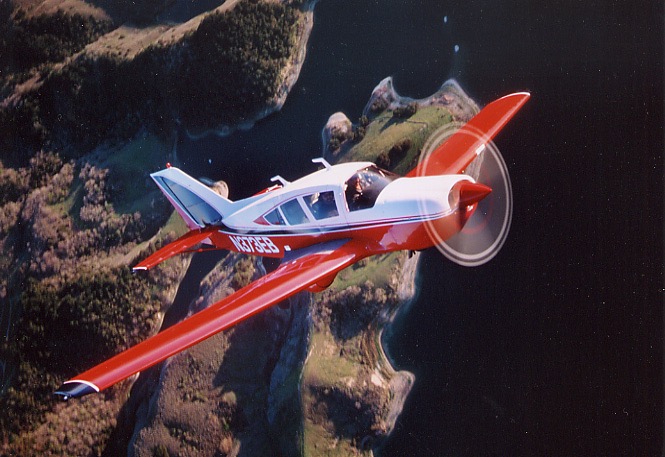
Why I Learned to Fly: Following My Son’s Lead
How a toddler’s fascination with airplanes grew into a shared father–son language of precision and safety.
My son has been fascinated by airplanes since he was a toddler. The moment he decided he wanted to become a pilot, he approached it with remarkable seriousness and focus.
He had his very first flying lesson at age 11, soloed on his 16th birthday, and earned his Private Pilot certificate before he even had his driver’s license. After receiving scholarship offers from Baylor University, Embry-Riddle Aeronautical University, and Purdue University, he joined Baylor University’s Aviation Sciences program. Today, he is a CFI and CFII rated for Single-Engine Land and Multi-Engine Land with High-Performance and Complex endorsements—teaching his own instrument students and working at KDFW.
He is truly my inspiration and role model. Watching his dedication made me want something we could share together for decades to come—and I wanted us to be able to compare notes as fellow pilots, especially when it comes to aviation safety. So I started taking flight lessons soon after he did, determined to set a good example and never cut corners.
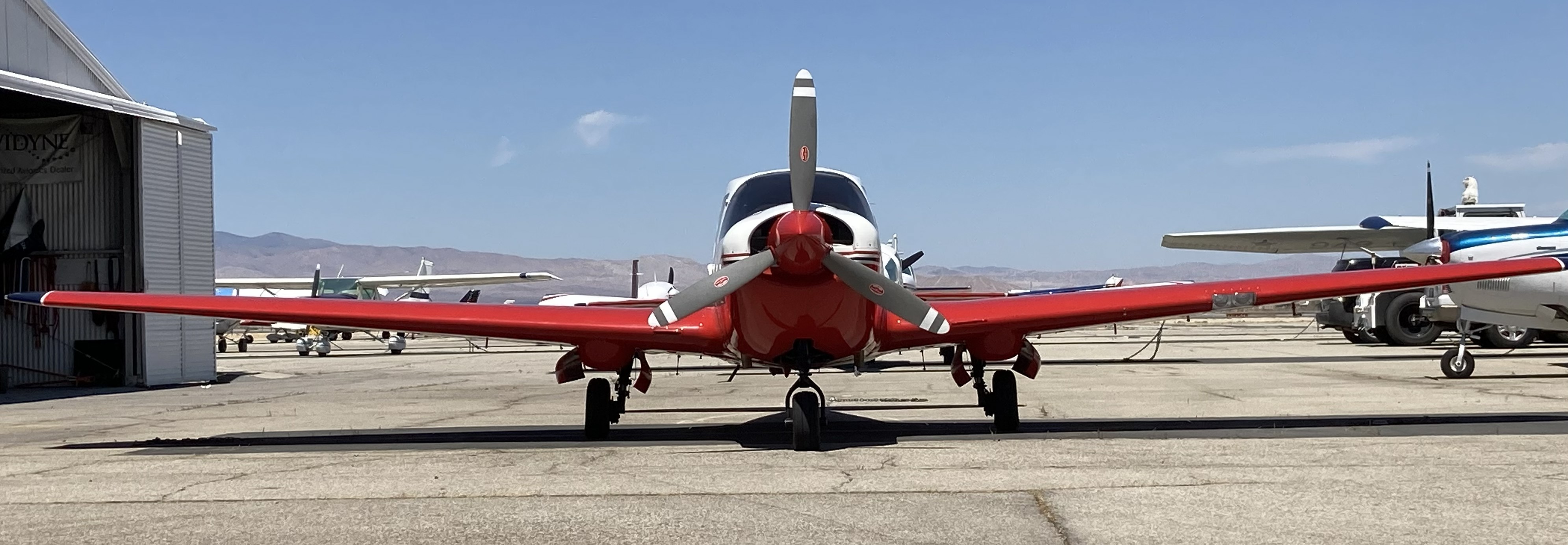
Meet N373EB:
1973 Bellanca Super Viking (BL-17)
A classic cross-country IFR commuter—hangared since factory-new and cared for with zero shortcuts.
The Bellanca Super Viking is famous among pilots for its crisp, responsive handling, Sitka spruce wing construction, and tubular steel fuselage cage. N373EB is a special example that requires attentive, knowledgeable care—and it has been kept inside a hangar since the day it rolled off the factory floor in 1973.
Avionics Upgrade Path & Panel Research (Click to expand) +
One of my top long-term priorities for N373EB is phasing out the legacy vacuum system and mechanical gyros in favor of modern, solid-state AHRS (Attitude and Heading Reference System) avionics. Because mechanical vacuum pumps can fail silently and cause an attitude indicator to slowly drift into a dangerous false bank, moving to redundant solid-state sensors adds a major margin of safety for hard IFR flight.
My primary upgrade goal for N373EB is to completely remove this legacy vacuum system and replace it with an Aspen Evolution 2000 MAX glass cockpit. This dual-screen setup pairs a Primary Flight Display (PFD) with a Multi-Function Display (MFD) powered by two independent, solid-state Attitude and Heading Reference Systems (AHRS)—meaning if the main screen ever fails, the second screen automatically takes over as a full backup flight display.
Upgrading a classic 1973 Bellanca Super Viking requires blending modern digital glass with proven legacy systems. Because our vintage Century II autopilot is the only autopilot certificated for this airframe, it will stay in the airplane—receiving modern digital roll-steering guidance from our Avidyne IFD540 GPS navigator and the new Aspen screens through an analog converter interface. While the instrument panel is open for this work, we will also replace our aging #2 radio with a modern slimline digital NAV/COM (such as a Trig TX56A or Garmin GNC 215) to preserve independent ground-based VOR and ILS navigation redundancy.
Finally, a proper avionics upgrade is as much about what comes out of the airplane as what goes in. Alongside capping the engine's vacuum pump pad and plumbing, the installation includes a thorough "behind-the-panel" cleanup—removing abandoned wiring harnesses, old coaxial cables, and unused brackets left over from decades of past upgrades. The result is a lighter, cleaner, and far more reliable instrument panel built specifically for safe, all-weather IFR cross-country flying.
[More specific panel component notes coming soon as I finalize the avionics roadmap.]
In the Air with N373EB
Captured in flight and paired with a real-world post-flight debrief.
Sample Post-Flight Debrief
After every flight—whether in N373EB or on my home simulator—I write an honest debrief. Here is how I break down what went well and where I can tighten things up next time:
- Mission & Weather Execution: Pre-briefed routing, winds aloft, and alternate airports matched actual enroute conditions cleanly.
- What Went Well: Stabilized IFR approach profile, crisp checklist discipline, and smooth power-reduction transitions.
- Areas to Sharpen: Tightening altitude capture during busy ATC frequency handoffs and refining power settings during descent.
My Philosophy:
“Define the Mission to Achieve Precision”
As pilots, we are never better than our current flight—so every takeoff starts with thorough 14 CFR § 91.103 due diligence.
Whether I’m firing up the Continental IO-520 in N373EB or sitting down at my home simulator, I treat every flight with the exact same preflight discipline. As pilots, we are never better than our current flight, so I always try to make every flight my best and safest flight. Good airmanship demands that we do all we can to remove surprises before the wheels ever leave the pavement.
Define the Mission
Clarify the exact purpose and objectives of the flight before engine start: Define the mission to achieve precision.
Route & Altitude Strategy
Select the safest, most efficient route and cruising altitude tailored to terrain, airspace, and winds aloft.
Unique Flight Risks
Identify the specific hazards unique to that day’s flight—from coastal marine layers to density altitude or night terrain.
Deep Weather Briefing
Study surface analysis, prog charts, icing/freezing levels, winds aloft, and convective outlooks—not just a quick METAR glance.
Every Escape Route
Pre-identify not only my destination alternate, but also a takeoff alternate and multiple enroute alternates along the way.
Honest Written Debrief
Grade both the good and the bad after landing. As I often tell my son: Anything you measure, you tend to become better at.
What I Worry About: SOP Disruptions & High-Attention Scenarios
Routine flights rarely catch a prepared pilot off guard—it is the sudden disruption to normal Standard Operating Procedures (SOPs) that creates traps. Here are three specific scenarios I pay extra attention to on every flight:
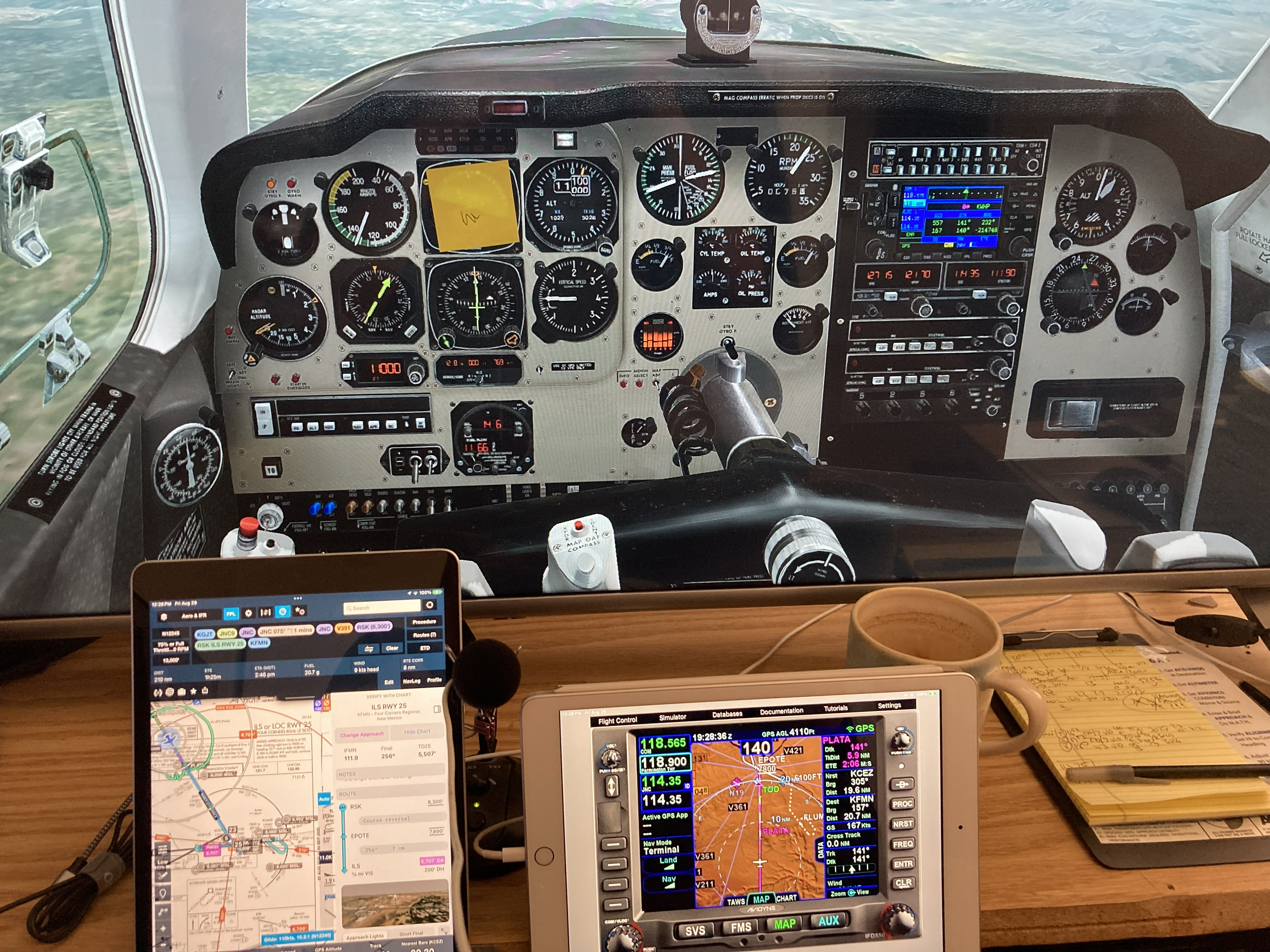
My home Basic Aviation Training Device (BATD) is where I train-in standard operating procedures and train-out bad habits—with all the real-world procedural benefits and zero physical consequences. While simulator hours don’t go into my FAA flight logbook (though I track every hour meticulously), they are my single most valuable proficiency resource.
In my view, PilotEdge is the single best value in general aviation. It pairs live, professional air traffic controllers with your home simulator so you can become genuinely fluent on the radios while simultaneously flying the airplane, managing avionics, and staying ahead of the procedure—all inside a safe, laboratory-like setting. Practicing on PilotEdge has made radio communications routine for me, freeing up critical mental bandwidth to focus on the many other aspects of safe IFR flight. Disclaimer: I am not paid by or affiliated with PilotEdge—I am simply a happy customer with roughly 2,000 PilotEdge hours logged, and I plan to use their service for years to come. For more information, visit https://pilotedge.net/
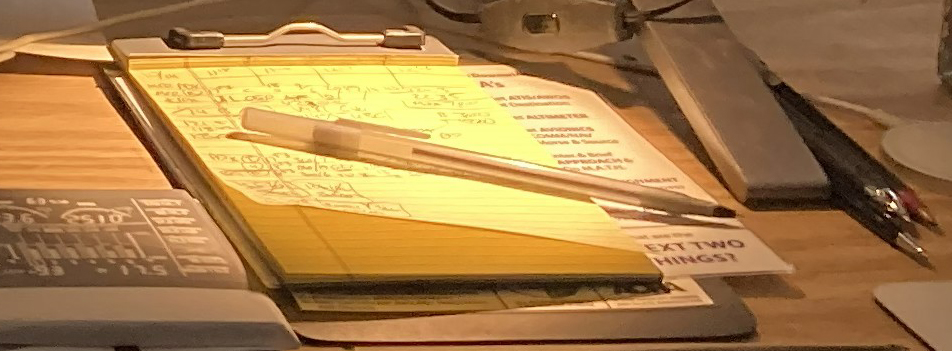
- Fuel Management: Tank switching times, burn rates, and aux-tank endurance tracking.
- Clearances & Frequencies: CRAFT IFR clearances, handoff frequencies, and transponder codes.
- Barometer & Weather Notes: Altimeter settings, ATIS/AWOS winds, and runway assignments.
- Performance Stats: Target power settings, climb CHTs, cruise TAS, and descent checkpoints.
- Planning Ahead — Upcoming Requests: Pre-scripted clearance requests and routing amendments before key fixes.
- Conditional & Approach Clearances: Highlighting conditional instructions (e.g., “Report established on the localizer”), step-down altitudes, and missed-approach holds.
The N373EB Photo Hangar
Filter by category or hover over any photo for location details. Click any image to enlarge.
The General Aviation Pilot’s Bookshelf
Curated favorites from 50–75+ print and digital books on flying, weather, A&P maintenance, engines, and aircraft ownership.